Personalisation
The conversation that already knows why they came — not a generic script with their name stuck on top.
Airgentic personalises the AI agent from the page they are on, the campaign that brought them, the country they are in, and the facts you already hold. The journey is deterministic. The model answers. It does not choose the journey.
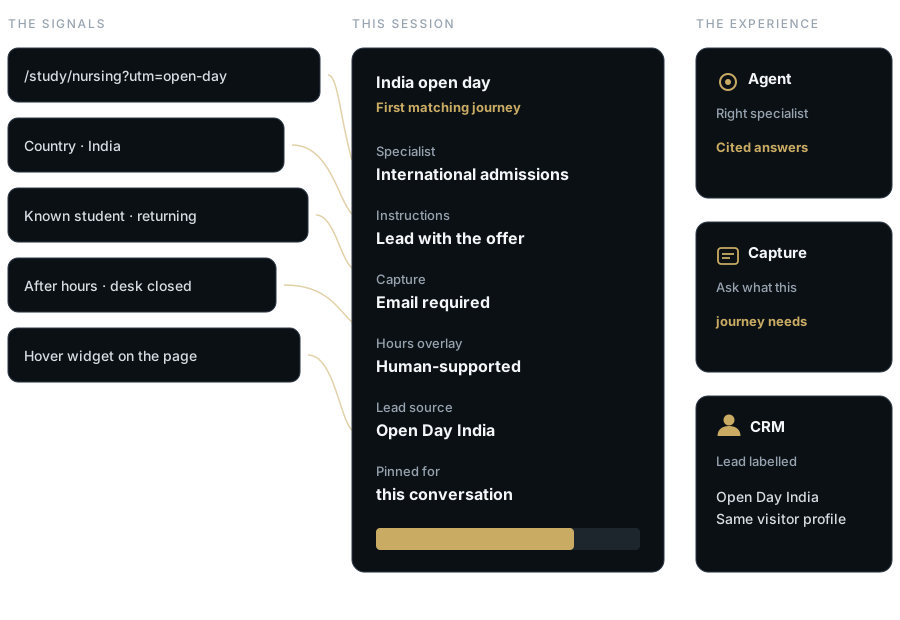
The problem:every visitor gets the same conversation
Someone arrives from an India open-day ad, on a nursing page, after hours, already known to your CRM. Your chatbot still opens like it is talking to a stranger on the homepage. The next team then spends the first five minutes re-learning what the click, the country and the record already knew.
- A campaign landing page and the homepage should not share a script.
- International and domestic visitors do not need the same first answer.
- A known student with an email in HubSpot is not a cold lead.
- Page-level script tags and one giant prompt do not scale to every journey.
Personalisation is not a longer prompt. It is the conversation that matches why they are here.
Three ways to personalise a chat
Most sites pick the first. A few attempt the second. Neither produces a journey your operators can see, test, or change.
One script for everyone
- The same welcome, agent and questions on every page
- Campaign spend lands on a generic assistant
- Country and CRM knowledge sit unused
- Operators cannot see why a chat felt wrong
- The model is asked to “sound personal”
Hacks on the page
- A different script tag on a handful of URLs
- UTM logic in GTM that nobody owns
- A prompt full of if-this-country rules
- Breaks the moment the campaign URL changes
- No capture, hours or CRM label with the pin
Airgentic Personalisation
- Ordered journeys from page, campaign, country, hours and known student
- Matching journeys stack for the session — you set the order
- The right specialist, instructions, capture and lead source
- Configured next to Visitor Profiles — not a second form
- The model answers. It does not pick the journey.
What the AI agent can see, this turn
Each message, Airgentic builds a picture of this visit and applies every matching journey. Those journeys stay with the chat, so a campaign click is not lost when they move to another page.
The page
Path and campaign parameters from the URL they are on — nursing, open day, a partner landing page.
The place
Country, city and region from the session, so international and domestic visitors are not treated the same.
The person
Visitor-profile fields already captured in chat, or filled from HubSpot and Marketo when they are identified.
The desk
Staffed hours before any overlay, so a campaign page can still offer a human when the weekly schedule would not.
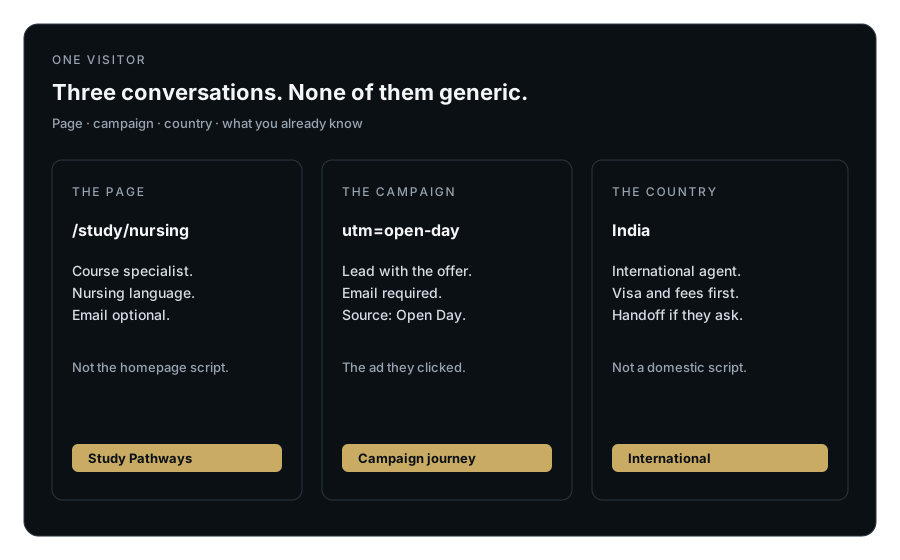
Same visitor. Three conversations that actually differ.
Personalisation is not swapping a first name into a template. It is changing who talks, what they lead with, what they collect, and how the lead is labelled — from signals you already have.
A worked higher-education example
- The page —
/study/nursingpins Study Pathways and keeps capture light. - The campaign —
utm_campaign=open-dayleads with the offer, requires email, and writes Open Day as the CRM lead source. - The country — India routes to International Admissions and talks visas and fees first.
Put specific journeys above broader ones so they take priority. Campaign, country and page can all apply to the same visit. You can see which ones fired in Admin Chat.
What actually changes in the conversation
A journey can do one of these, or all of them. Leave an effect blank and the AI agent keeps the usual behaviour.
- The right specialist — Pin a live task-specialist agent for this session. Conversational AI still answers with citations. A page-level script pin still wins if you need one URL to always use one agent.
- Journey instructions — Extra briefing after the agent prompt — campaign language, country context, what to lead with. Shared identity and tone stay in the agent prompt.
- Capture for this visit — Make email required on a campaign page without changing Visitor Profiles for everyone else.
- Hours for this visit — Overlay human handoff on a landing page while the weekly schedule is AI-only. The desk override still wins service-wide.
- CRM lead source — Label the next HubSpot write so marketing can see which journey produced the conversation. The visitor profile is still the record.
Personalisation is the journey. The rest is still Airgentic.
Know the person
Facts about them, not a second form.
Answer in context
The journey chooses the specialist. Grounding does not change.
Where it lands first
Recruitment, sales, and any site with more than one journey.
Why this is the right architecture
Buyers ask for personalisation and then get a chatbot that greets them by first name. That is not a journey. Airgentic separates who they are from how this visit should run.
- Deterministic — Operators set the order. Matching journeys stack. The language model does not pick a persona.
- Sticky — Once a journey matches, it stays for the session — including if chat persists across pages. New facts can add another journey; they do not replace the ones already active.
- Testable — Paste a campaign URL and a country in the editor. Confirm the match in Admin Chat. No guessing.
- No second lead system — Capture and CRM still flow through Visitor Profiles. Personalisation only changes the journey around that record.
- No prompt archaeology — Campaign copy lives on the journey, not as a parallel prompt type and not as country tags in every agent file.
FAQs
Is this just putting their name in the welcome message?
No. A name in a greeting is decoration. Airgentic personalisation changes the specialist, the briefing, what you collect, hours, and how the lead is labelled — from the page, campaign, country and known-student record.
Does the AI choose which journey to use?
No. You order the journeys. Matching ones stack for the session. That is deliberate: campaign and country behaviour should be auditable, not a model decision.
How is this different from Visitor Profiles?
Visitor Profiles store facts about the person — name, email, campus — and write them to HubSpot or Marketo. Personalisation is the journey: how the AI agent behaves because of the page, the campaign, the country, and those facts. They are designed to work together. A profile without a journey is a qualified stranger. A journey without a profile is a campaign script with no record.
When should we use a page-level agent pin instead?
When one URL must always use one specialist — for example an installer finder page. That is a script-tag pin. Use personalisation when the specialist, briefing, capture, hours or CRM label depend on campaign, country, hours or a known student.
Will the first answer already know the CRM record?
Identify lookup runs in the background. The first answer may not yet include CRM fields. A later turn can add a journey once those fields arrive, without dropping the page or campaign journey already active. Conversation values always win; CRM only fills empties.
Does this replace Future Student Experience?
No. Future Student Experience interviews someone who does not yet know what to study and builds a shareable page. Personalisation is for everyone else on the service — the campaign click, the country, the known student, the page they are already on.
Stop running one conversation for every visitor
If people already arrive from campaigns, countries and pages that mean something, the journey should mean something too. Airgentic is built for personalised conversational experiences — cited, specialist, and under your control.
- Match on page, campaign, country, hours and known student
- Pin the specialist, briefing, capture and lead source for that visit
- Keep Visitor Profiles as the record your CRM and advisors share
The model answers. You choose the journey.
Still have questions?
Ask our AI — get cited answers about personalised conversations, campaigns, country journeys, visitor profiles and CRM.